
![[Group News] Leaders from Gansu Mobile Paid a Visit for Exchange and Guidance](/d/file/efpub/20250919/5e3579e7820f5f53c8128cbf6290f358.jpg)
In wireless mobile communication systems, the main function of a combiner is to combine input multi-band signals into one output path and send them to the same indoor distribution system.
In engineering applications, it is necessary to simultaneously output 800MHz CDMA network, 900MHz GSM network, or other different frequencies. Using a combiner allows a single indoor distribution system to work in CDMA band, GSM band, or other bands simultaneously.
For example, in a radio antenna system, input and output signals of several different frequency bands (such as 145MHz and 435MHz) are combined through a combiner and connected to the radio with a single feeder line. This not only saves one feeder line but also avoids the trouble of switching between different antennas.
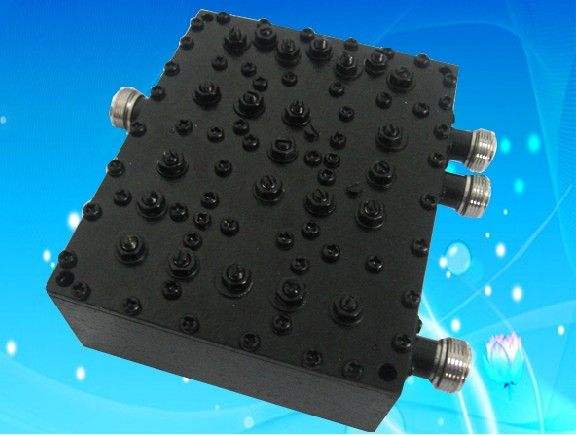
I. What is a Combiner?
A combiner is generally used at the transmitting end. Its function is to combine radio frequency (RF) signals from two or more different transmitters into one path and send them to the antenna for transmission, while avoiding mutual interference between signals of each port.
II. What is the Function of a Combiner?
In engineering applications, it is necessary to combine and output two frequencies: 800MHz CDMA network and 900MHz GSM network. Using a combiner enables a single indoor distribution system to work in both CDMA and GSM bands simultaneously. Another example: in a radio antenna system, input and output signals of several different frequency bands (such as 145MHz and 435MHz) are combined through a combiner and connected to the radio with a single feeder line. This not only saves one feeder line but also eliminates the trouble of switching different antennas.
The above is an introduction to combiners and their functions. If you have any other questions, welcome to consult Shanghai Huijue Technology Group Co., Ltd.
——END——